
Why I Felt Funny
How Felt Became The Fabric Of Seth Stanley's Universe

When I started making illustrations for the A-Z of Movie Deaths back in 2011, I thought what I was doing looked kind of flat. I needed something to breathe some life into them and make them feel real.
Not realistic. Real.
Vibrant and tangible enough that they could actually exist.
I started experimenting with different textures in Photoshop and eventually tried adding felt to the shapes I'd created. It really elevated the drawings. Suddenly they were tactile. I could almost touch them through the screen.
They stopped feeling like shapes, and started feeling like things.
What didn’t occur to me then, was how much time adding textural detail would add to my creative process. I would sketch, outline and colour the drawings, and then have to find coloured textures that worked as part of the overall aesthetic. It was adding hours.
Often, when an artistic flourish becomes too much effort to maintain, I discard it. But I persevered with felt and texture, for a reason I couldn’t really articulate at the time.
Every illustration now had several new layers.
In every sense.
The felt stopped being a texture. It was sewn into the visual identity of what I was making. Even though I was working digitally, I could have been making these images by hand. It wasn’t a conscious thematic choice. I was just following what felt right.
Felt felt right.
And now it’s entwined with the story material I’ve been threading together around Seth Stanley.
I’d accidentally chosen a texture that came out of the box with its own storytelling language. A language of material, embroidery and needlework.
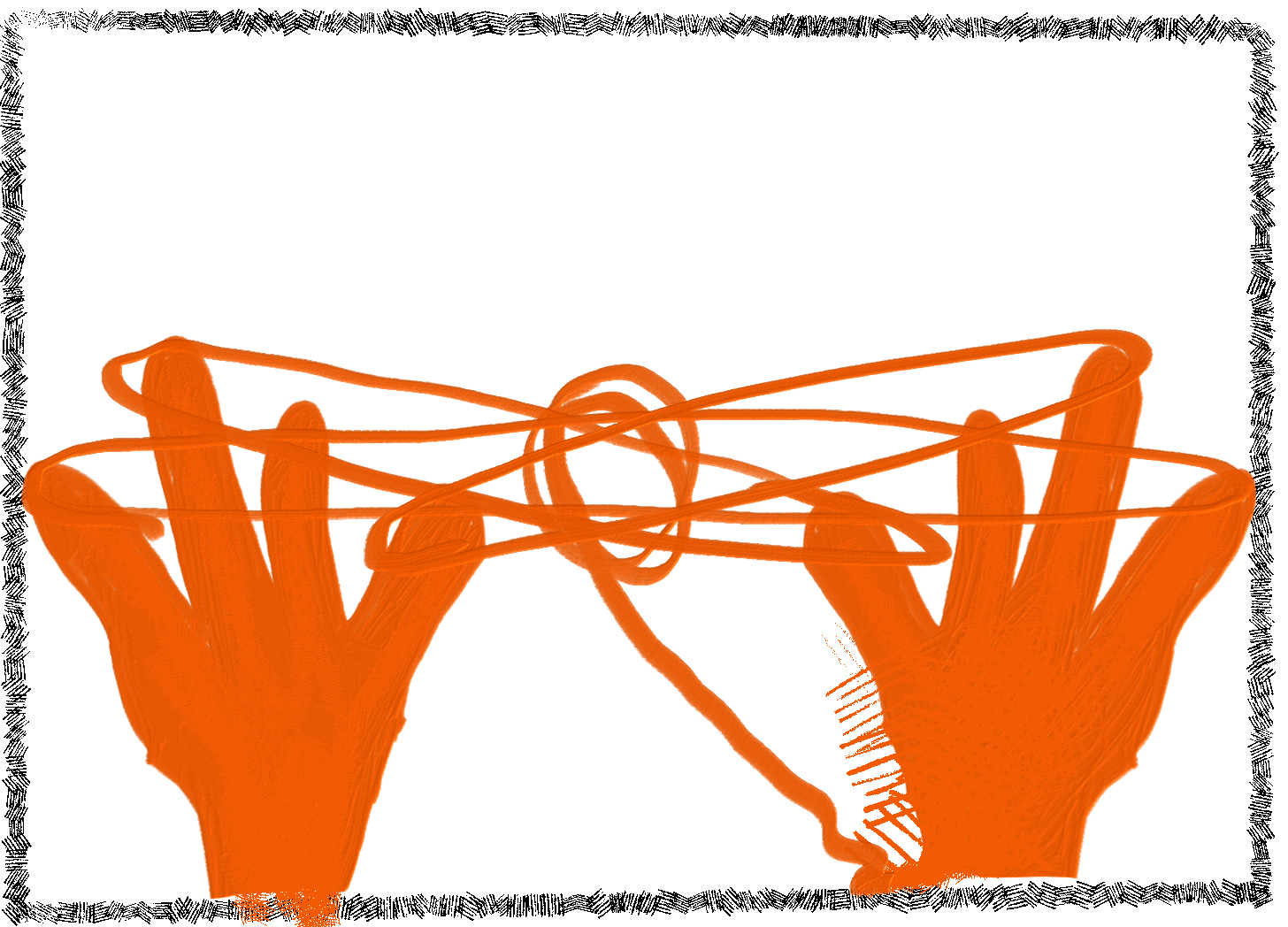
In Greek mythology, the three Sisters of Fate spin the thread of a person’s life, measure its length, and eventually cut it.
It’s a metaphor for the length of a life, and one we still use to talk about stories with multiple timelines and realities.
When people are having an emotional breakdown, we say they’re “coming apart at the seams”, or “fraying around the edges”. If we’re being really unkind, we might say they’re “unravelling”.
But fabric is not just a language of falling apart.
If we laugh uproariously, we might say we were “in stitches”.
If we get hurt, we need to be “patched up”.
Loose ends can be tied together. Torn things can be repaired.
If I was creating a man who could flit from movie death to movie death seamingly without consequence, had I stumbled on a way to demonstrate the cost?
Every death could leave a loose thread to follow up and take a little piece of Seth Stanley with it.
After all, without the peril of death, where is the tension?
This was another piece of the patchwork plot I was building towards.